Lalibela, Ethiopia · UNESCO World Heritage

Discover the
New Jerusalem

Your expert local guide to the twelve 12th-century churches carved from the living rock - one of the most extraordinary places of worship ever built by human hands, still breathing with faith today.

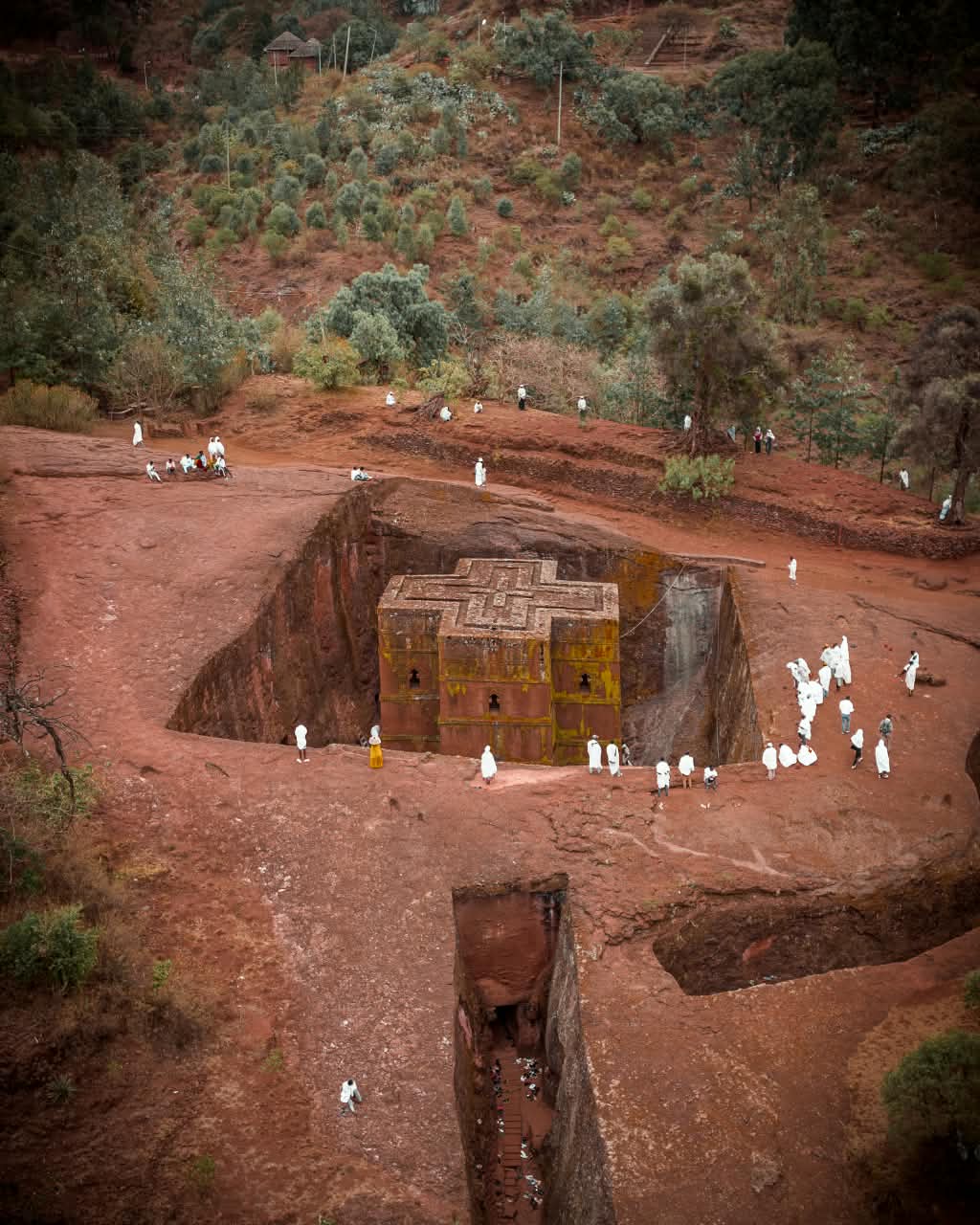
Pilgrims dressed in white gather around the cross-shaped roof of Bete Giyorgis, carved down into the red rock
Pilgrims at Bete Giyorgis (Church of St. George), Lalibela · Photo: Frederik J Jacobs

Selam, I’m Maseresha.

I was born in Lalibela and grew up among these churches. For more than twelve years I have guided travellers through them. Every tour I give is private and planned around you, so tell me what you hope to see and I’ll suggest a plan.

Carved from the living rock of the Ethiopian Highlands

In the 12th and 13th centuries, King Lalibela commissioned a New Jerusalem - not built upward, but excavated downward into the red volcanic tuff of the Lasta Mountains. The result: eleven monolithic churches hewn entirely from the bedrock, connected by subterranean tunnels, and still serving as places of active Christian worship nine centuries later.

A UNESCO World Heritage Site since 1978, Lalibela sits at 2,630 metres above sea level in the Amhara region of northern Ethiopia. Pilgrims arrive on foot from hundreds of kilometres away for the festivals of Timkat and Genna - celebrations that have occurred without interruption for eight hundred years.

This is not a ruin. It is a living city of faith, carved in stone, that stands among the most spiritually charged places on the planet.
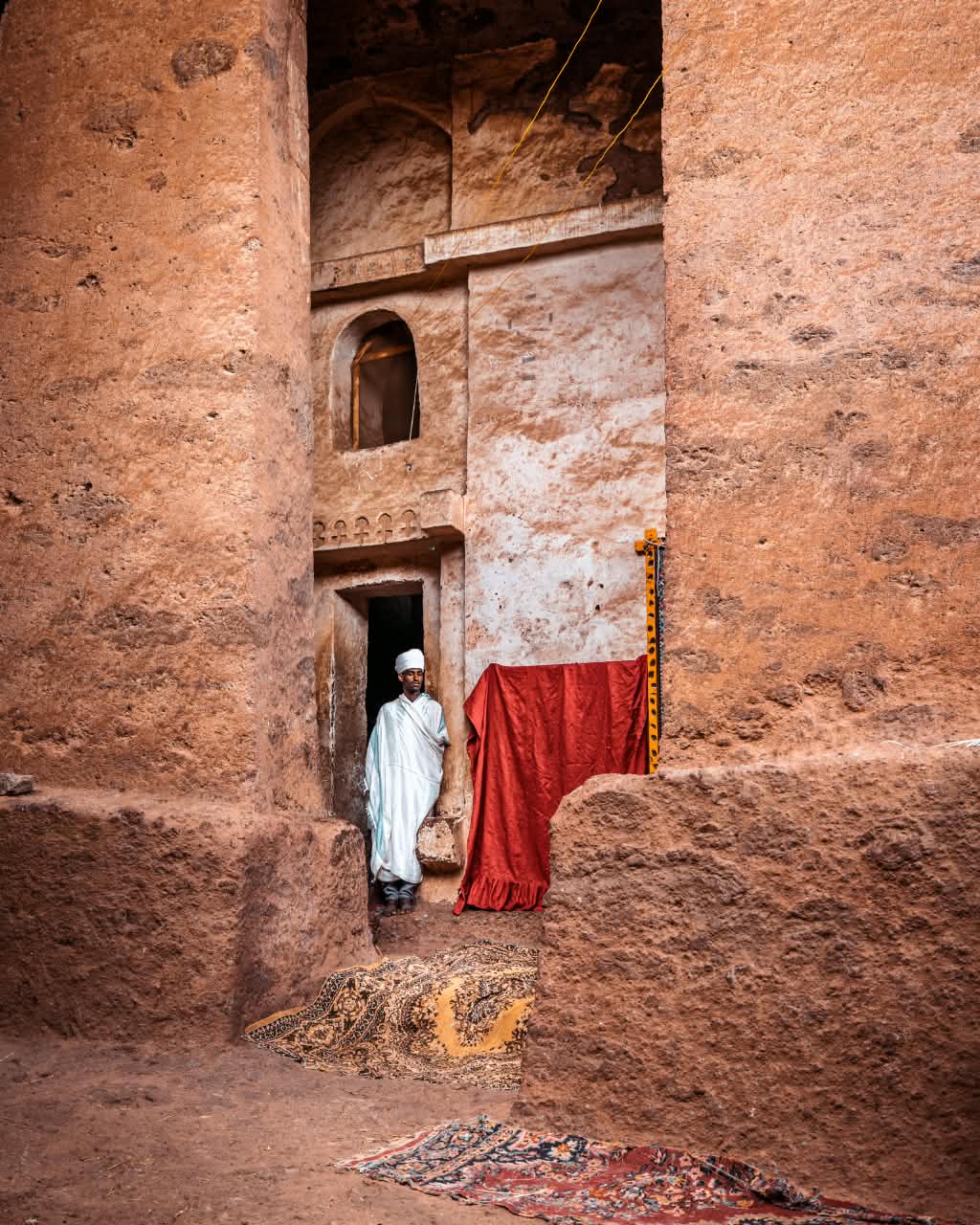
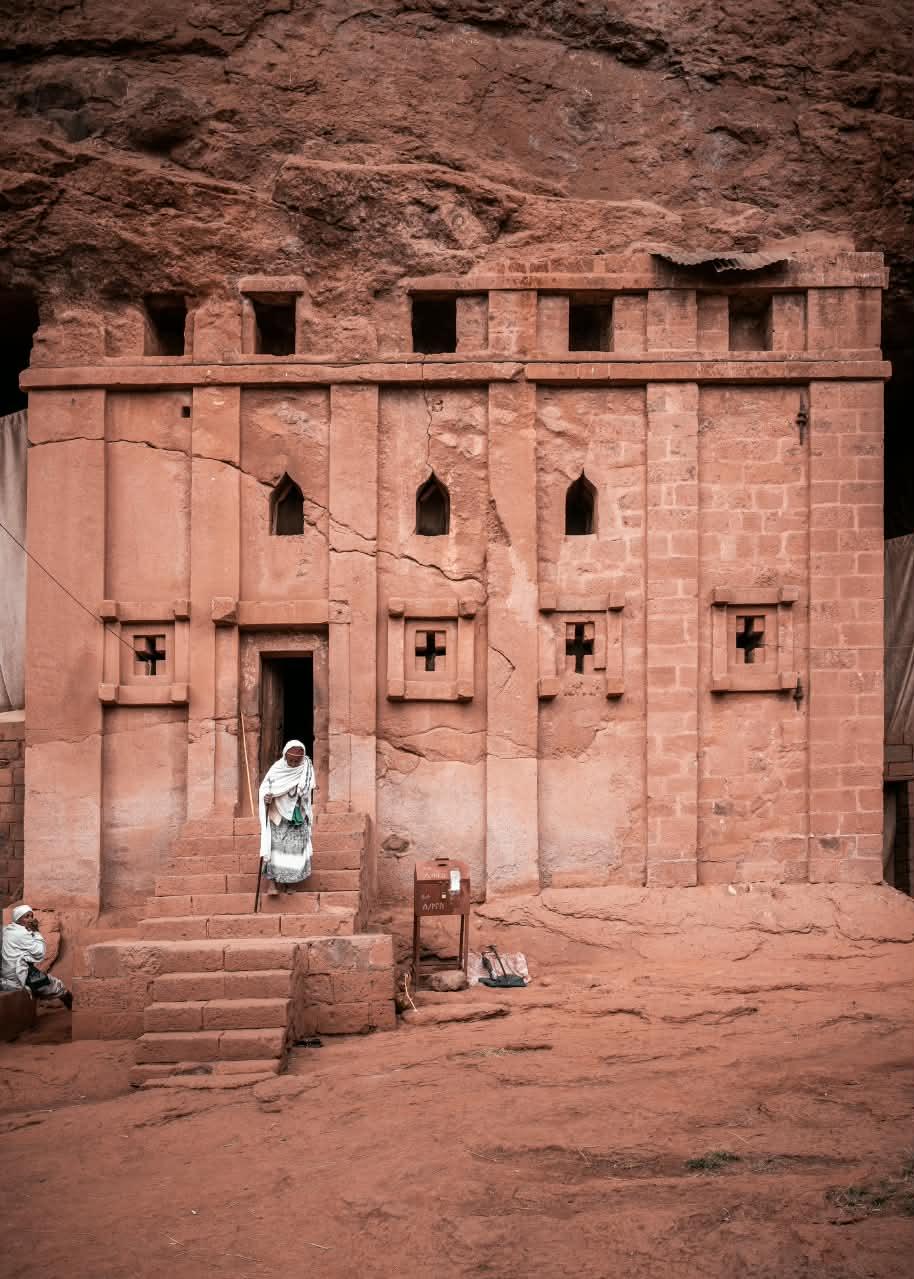
A priest in white robes stands in the doorway of a rock-hewn church between massive carved pillars
A priest at the door of a rock-hewn church, Lalibela · Photo: Frederik J Jacobs
A pilgrim wrapped in a white shawl walks down the steps of a church carved into the red cliff
A church carved into the cliff face, Lalibela · Photo: Frederik J Jacobs
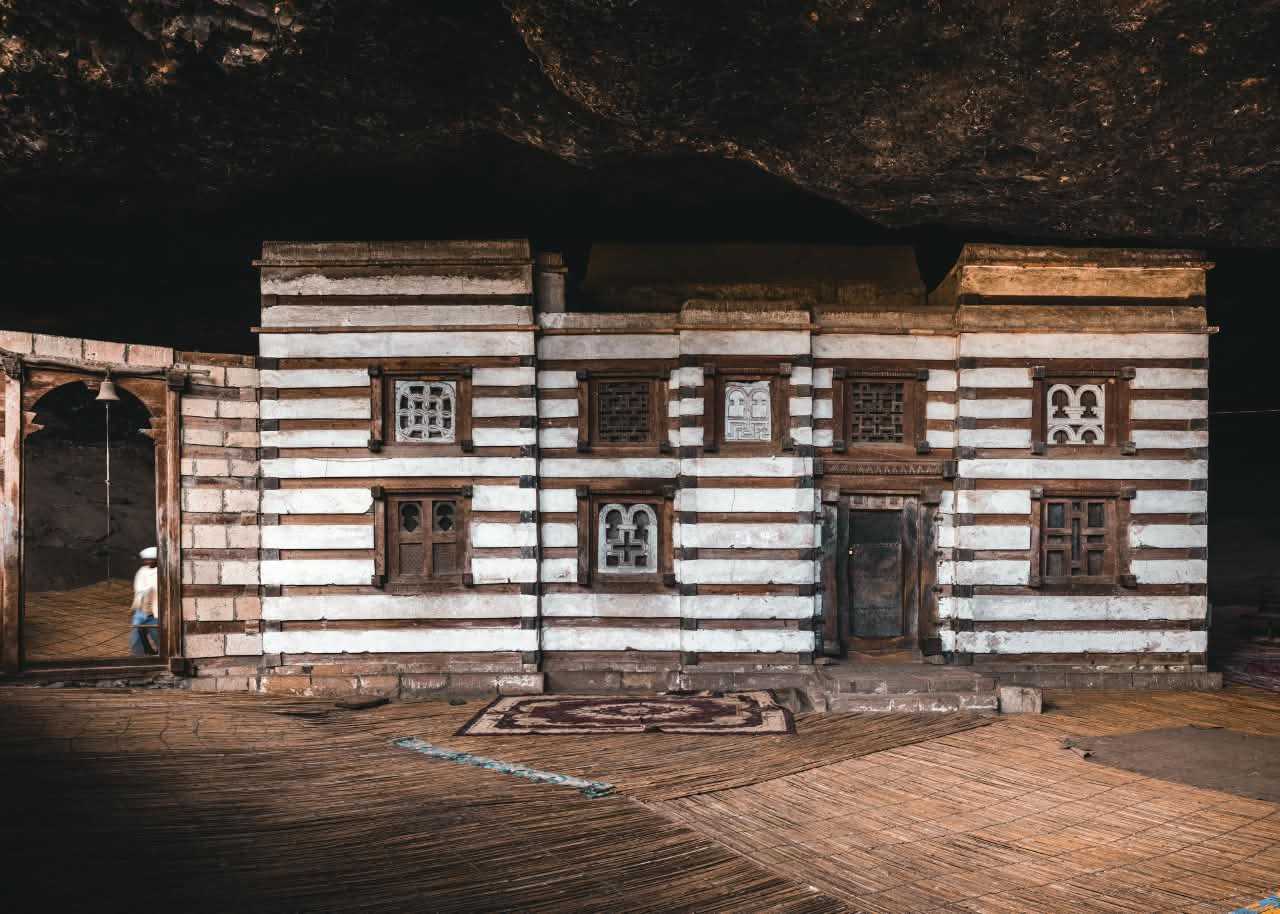
The striped wood-and-stone walls of Yemrehanna Kristos church, built inside a large cave
Yemrehanna Kristos, a church built inside a cave near Lalibela · Photo: Frederik J Jacobs
“Standing inside Bet Medhane Alem - the largest rock-hewn church in the world - it is impossible not to feel the weight of centuries and the lightness of something transcendent.”

Maseresha

Born and raised in Lalibela. A guide whose knowledge was inherited from the city itself.

Maseresha grew up in the shadow of these churches. As a child, he followed the priests through the subterranean passages between Bet Golgotha and Bet Medhane Alem, learning the names, the saints, the stories that no guidebook contains. What began as a childhood education became a lifelong vocation.

After studying history and tourism at Addis Ababa University, he returned - not to leave, but to share. For over a decade, Maseresha has guided travellers from the United States, Europe, and Asia through these churches with the fluency of a scholar and the warmth that Ethiopian hospitality is, without exaggeration, famous for.

He speaks English fluently, knows every monk and gatekeeper by name, and understands instinctively when a visitor needs a moment of silence rather than more information.

  • Licensed by the Ethiopian Tourism Authority
  • Fluent in English, Amharic, and French
  • B.A. in History & Cultural Heritage, Addis Ababa University
  • 12+ years guiding international travellers
  • Safety-certified first-aider, knowledge of highland altitude precautions

Choose your depth

Every tour is private, with unhurried time at every site, for one to four guests. Prices cover your guide; entrance tickets, meals and transport are paid separately.

Half-Day Tour

The Masterpieces

4 - 5 hours

A deep reading of the Northwestern cluster - Bet Medhane Alem, Bet Maryam, Bet Golgotha, and the Selassie Chapel. The oldest churches, the richest painted ceilings, the quietest hours of morning light.

Northwestern clusterDeparts 07:00 or 15:00Maximum 4 guests
Enquire →
Multi-Day

Beyond the Town

2 - 4 days

The highland monasteries surrounding Lalibela - Asheten Maryam and Nakuto Lab - reached by foot or mule along ancient pilgrimage paths. For the traveller who wants to understand Lalibela as a landscape of faith, not only a monument.

Highland monasteriesTrekking routes availableFully customisable
Enquire →
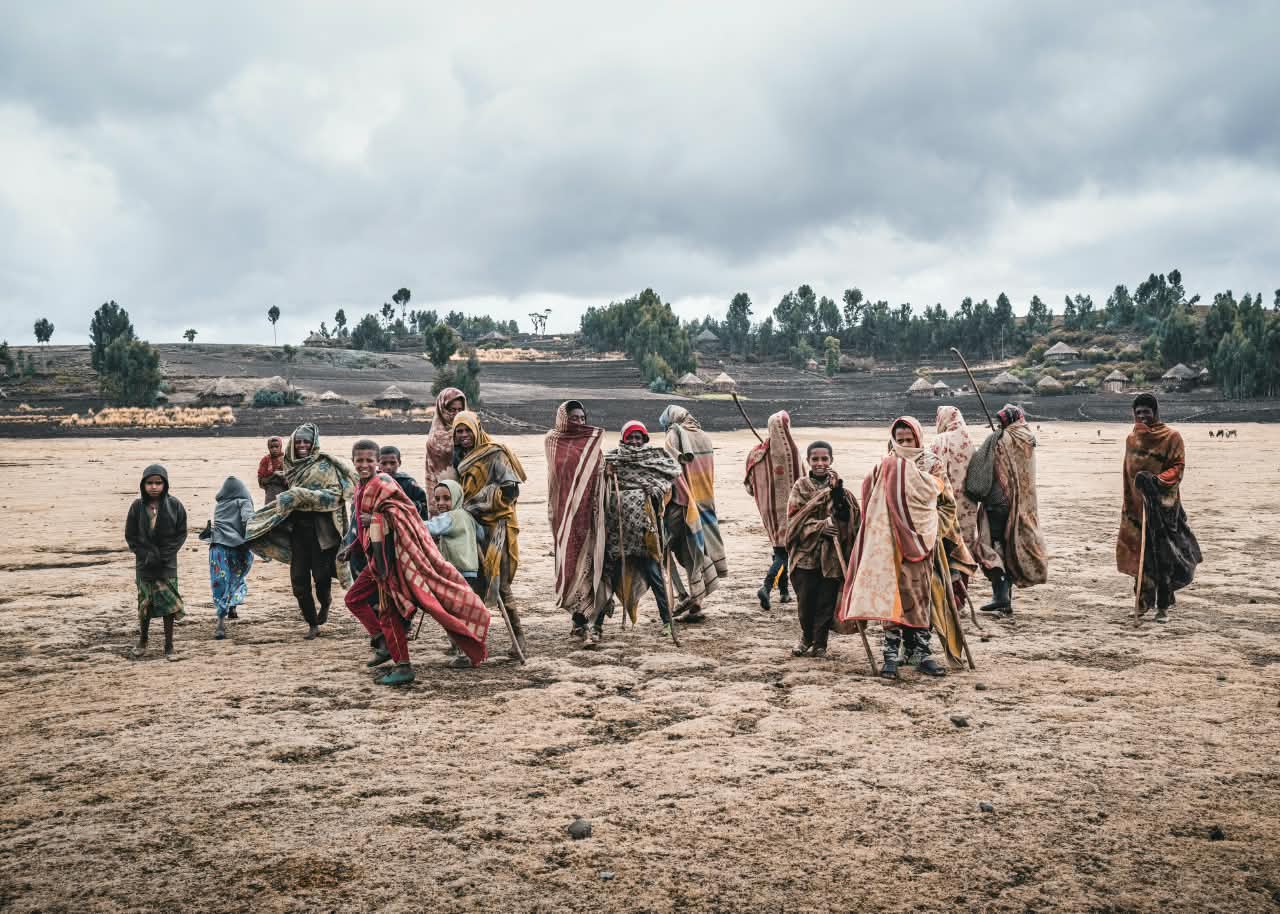
Villagers wrapped in colourful blankets walk across a highland plain under a cloudy sky
Villagers in the Lasta highlands · Photo: Frederik J Jacobs

Before you come

All travel guides →

Begin your journey to Lalibela

Response timeWithin 24 hours. All enquiries welcome.

We use your details only to reply and plan your trip. Privacy policy

WhatsApp